Skip to content
English
  • There are no suggestions because the search field is empty.

Product Impact Calculator: Purchases

Table of Contents


Navigation

  1. Select Products.
    44313344688155.png
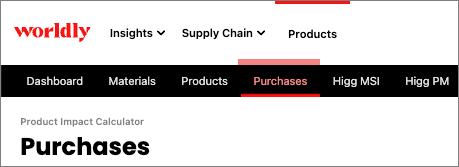
  2. Select Purchases from the black navigation bar.44313344689179.png
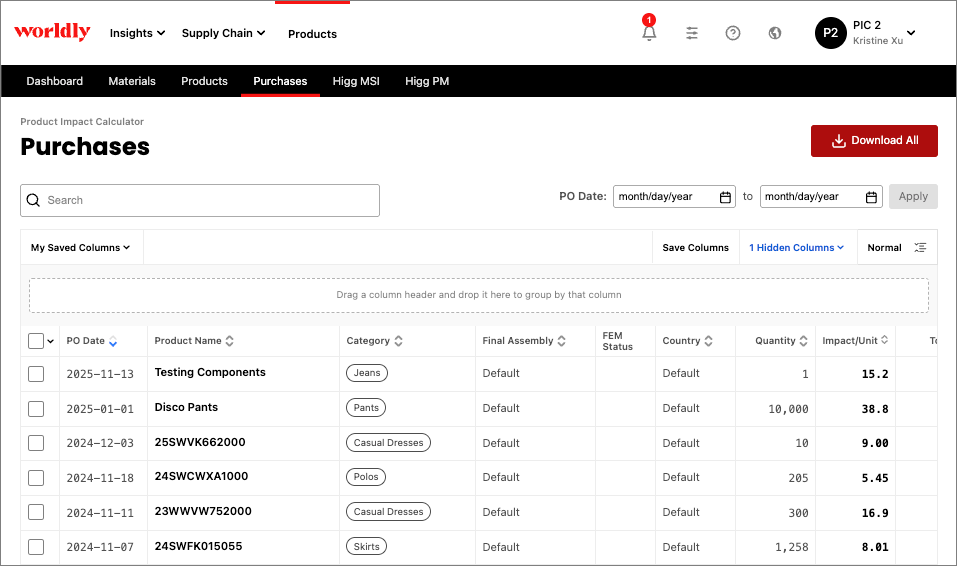
  3. Purchases are available here.
    44313360973595.png


Purchases

The Purchases page is where you can view purchased goods and delete purchase orders. This page provides an interactive data table that gives brands the ability to identify hotspots such as highest emitting products and categories.

This table focuses on high levels of interaction and customization, such as finding records that fit a specific criteria, comparing data, and taking action on multiple records.


Purchases Table Columns

Field Name
Description
PO Date
Purchase Order date
Product Name
Name of the product
Product Category
Determines default product weight, materials, components
Final Assembly
Tier 1 facility name which links to its respective FEM assessment.
FEM Status
Status of the FEM assessment
Country
Linked FEM country value
Quantity
Quantity purchased
Impact/unit
Impact per product
Total Impact
Total impact for the purchase order
MSI Version
MSI version used for the impact calculations
Added
Date the product was added
Modified
Date the product was last modified
PO #
Purchase Order number


Navigating Purchases

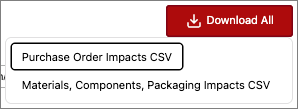
  1. Select the Download button to download impact reports
    39906699614619.png
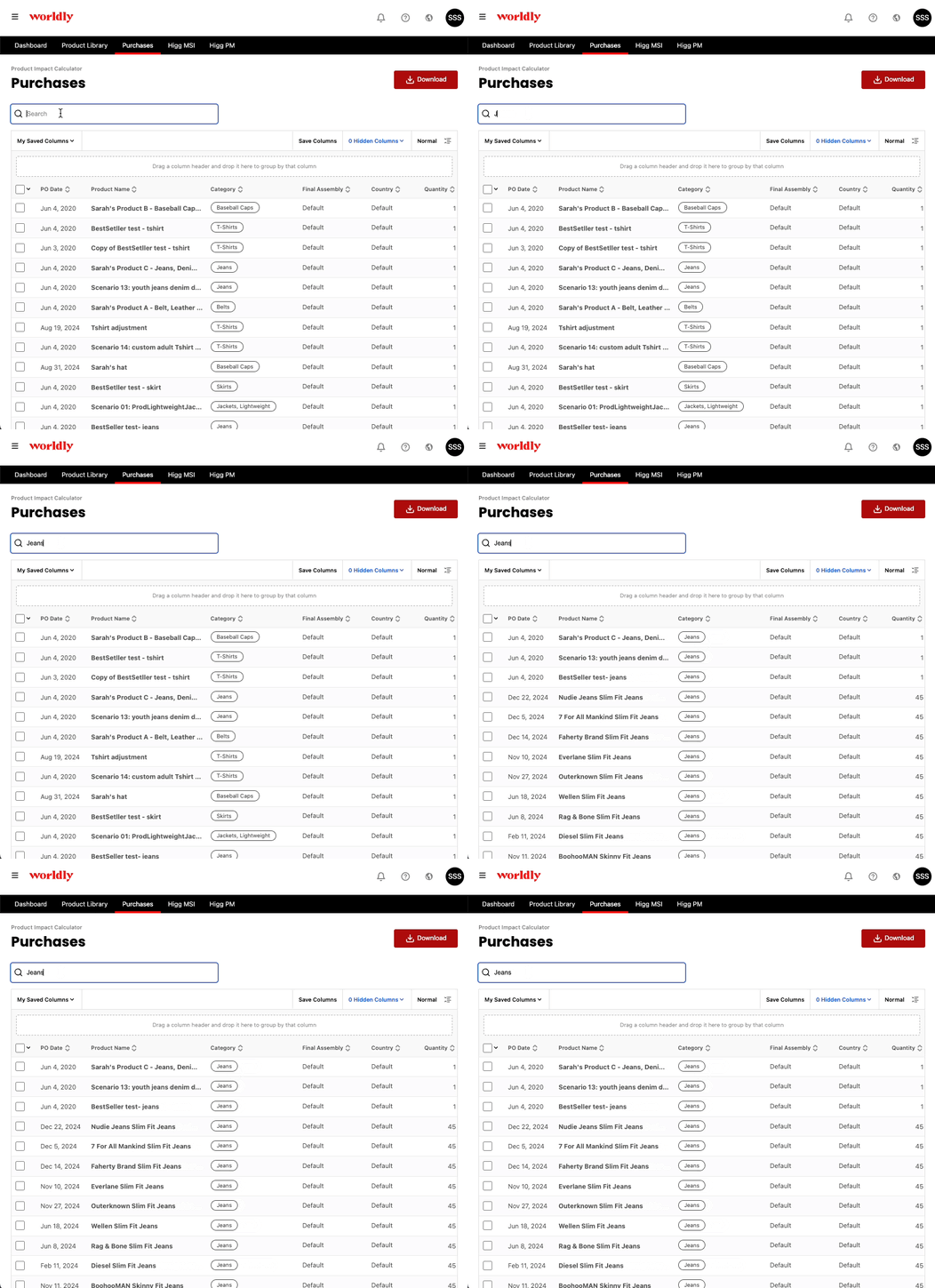
  2. Search the Purchases page by typing into the search bar. For example, you can search for jeans to show all of your jeans on the purchases page.

    Expand to show screenshot
    37619697050011.gif
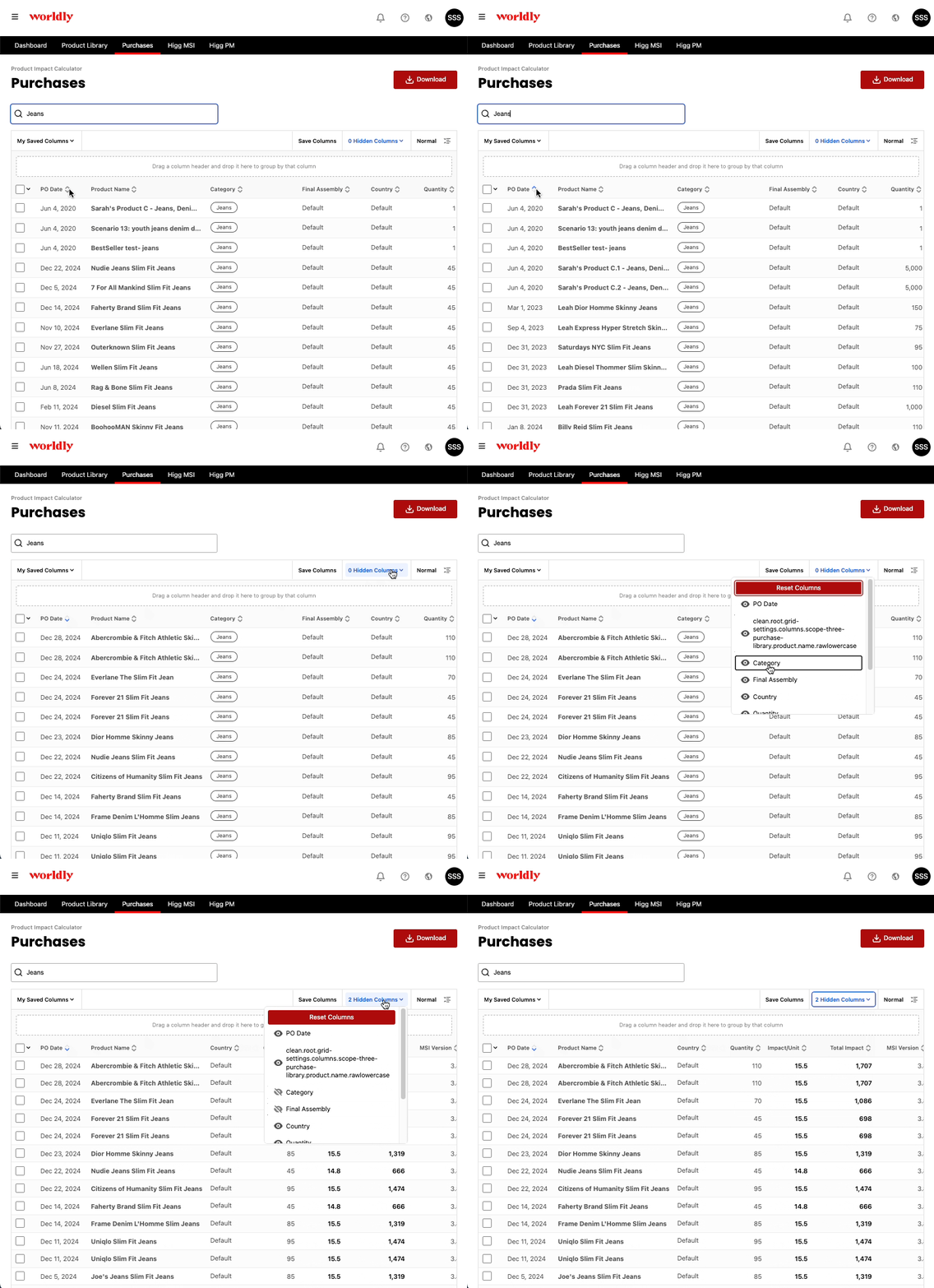
  3. Sort the Purchases page by clicking the arrows next to the column. For example, you can sort the PO Date column for the purchase order date. You can also show or hide columns within the table.

    Expand to show screenshot
    37619668802075.gif
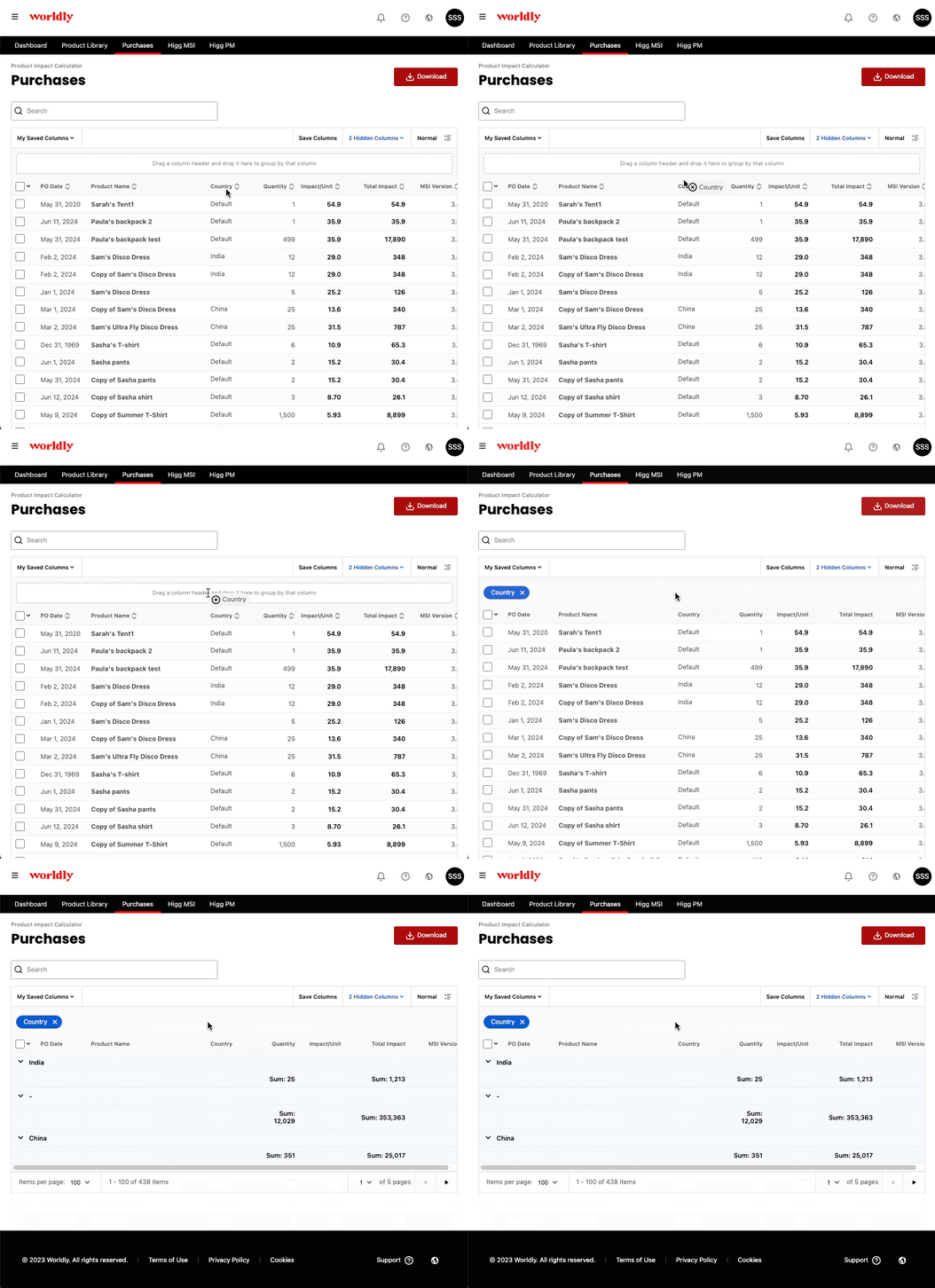
  1. Group the Purchases page by dragging a column header to the top of the table. For example, if your products were purchased in several different companies, grouping by the Country header can help organize your inventory more efficiently. The grouping feature also aggregates the Quantity and Total Impacts as indicated by the Sum total in each column.

    Expand to show screenshot
    37619697050395.gif
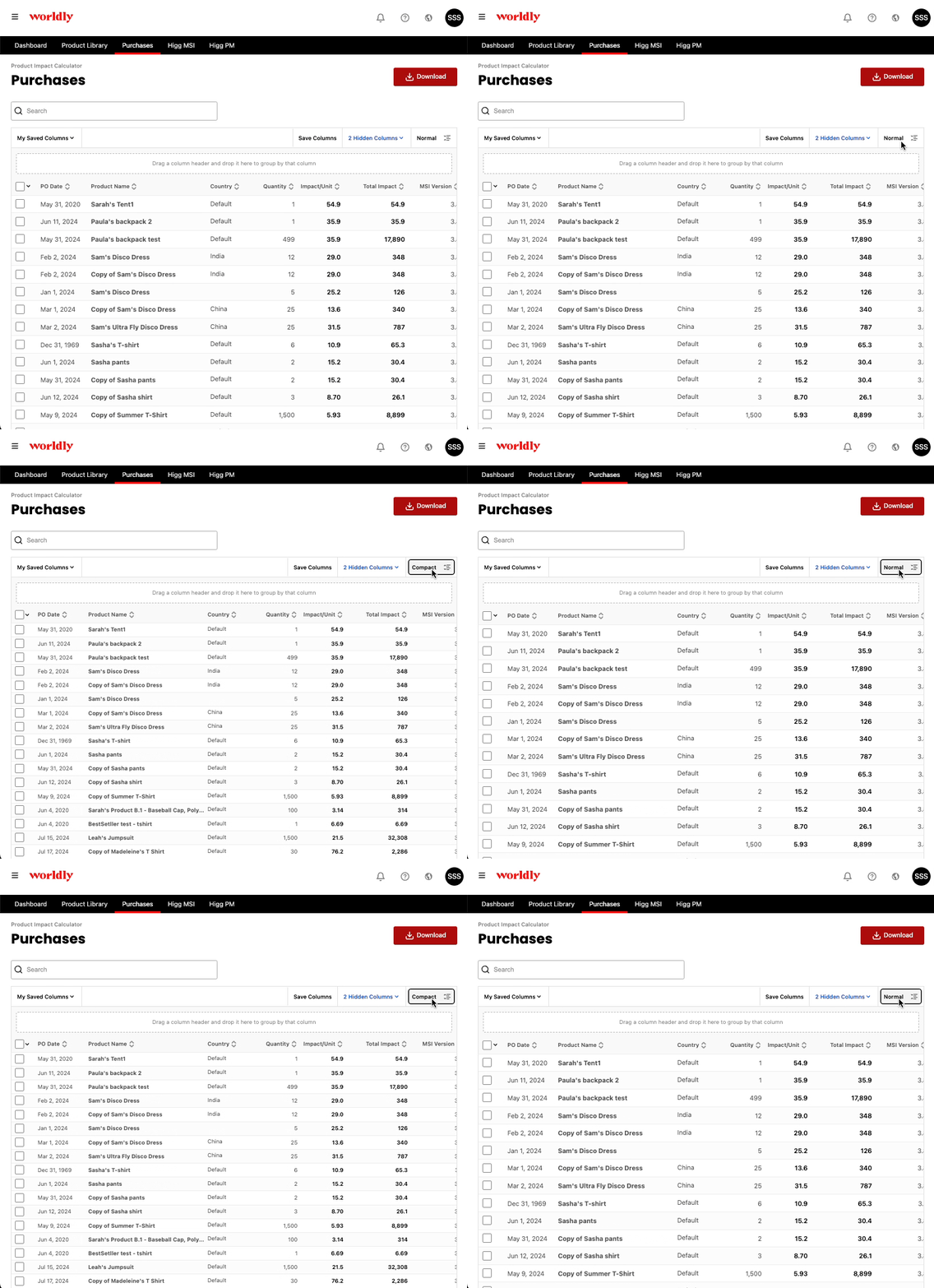
  1. Toggle between Compact and Normal views by selecting the toggle at the upper right corner of the table. You can change your view depending on your viewing preferences.

    Expand to show screenshot
    37619668802203.gif
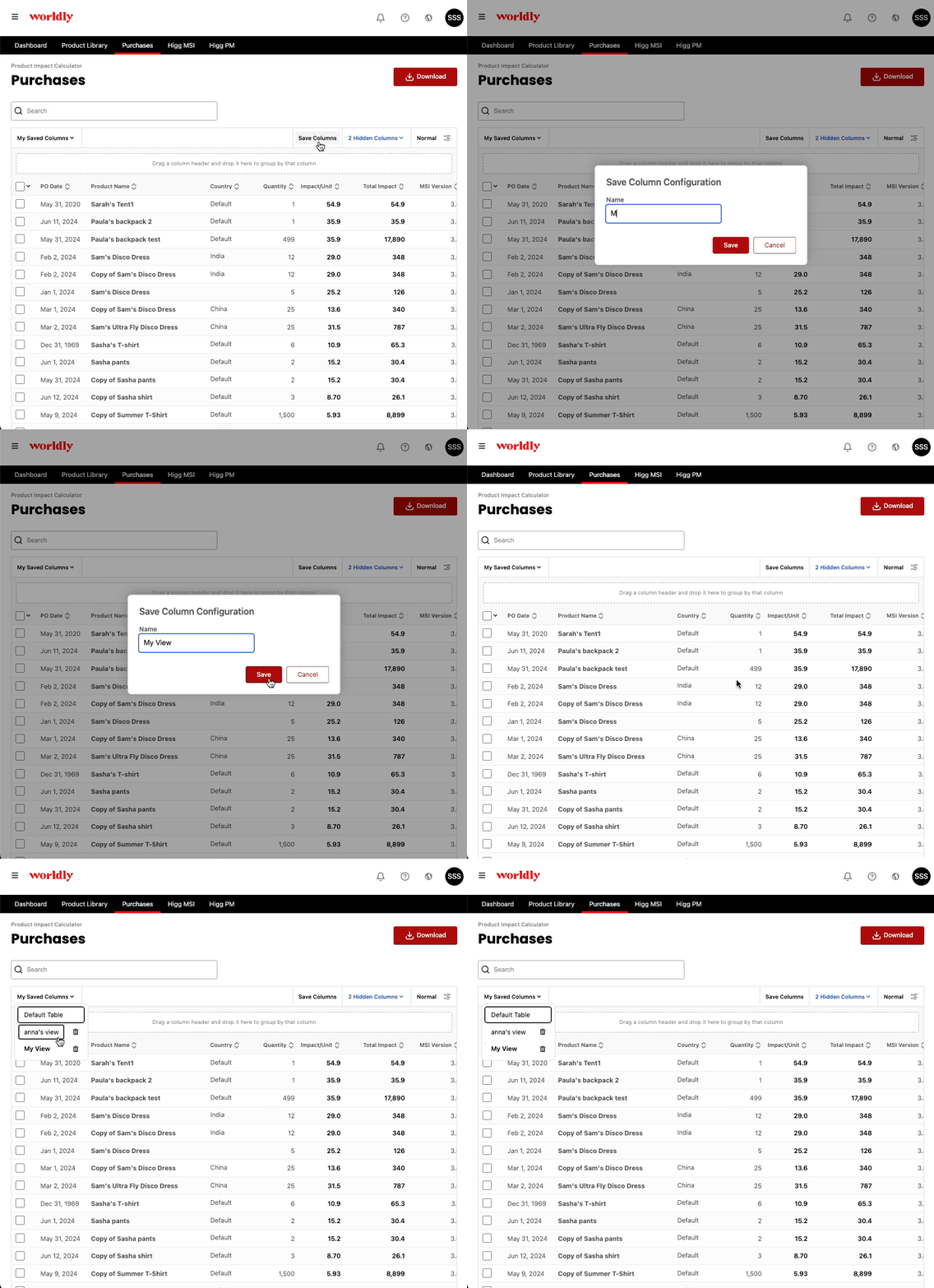
  2. You can also save a view by selecting Save Columns and giving a name to your view. Saving a view makes it easier to access an already customized table specific to your organization.

    Expand to show screenshot
    37619668802331.gif


Date Range Filtering

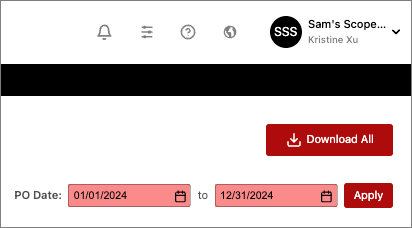
In the upper right corner of the screen, notice the date range filter labeled PO Date. Enter in a start date and end date into the numerical fields to filter data for a specific date range.

For example, if you’d like to filter for 2024, enter January 1, 2024 to December 31, 2024.
40766127062939.png

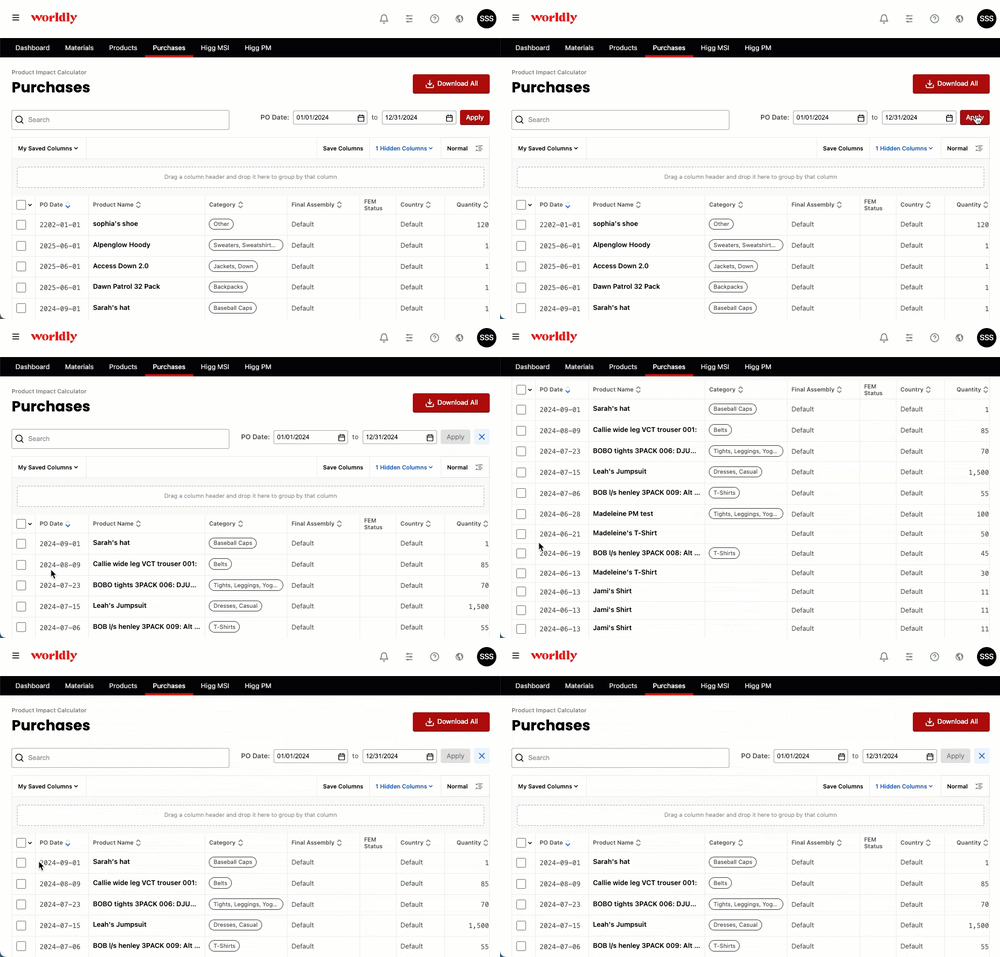
Click Apply, which will update the page to include data just within that date range.

Expand to show screenshot
Date Range 2.gif

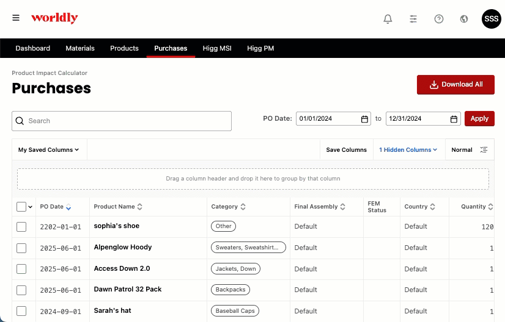
This applies to the Dashboard, as well as the Purchases tab.

Expand to show screenshot
40766127067419.png

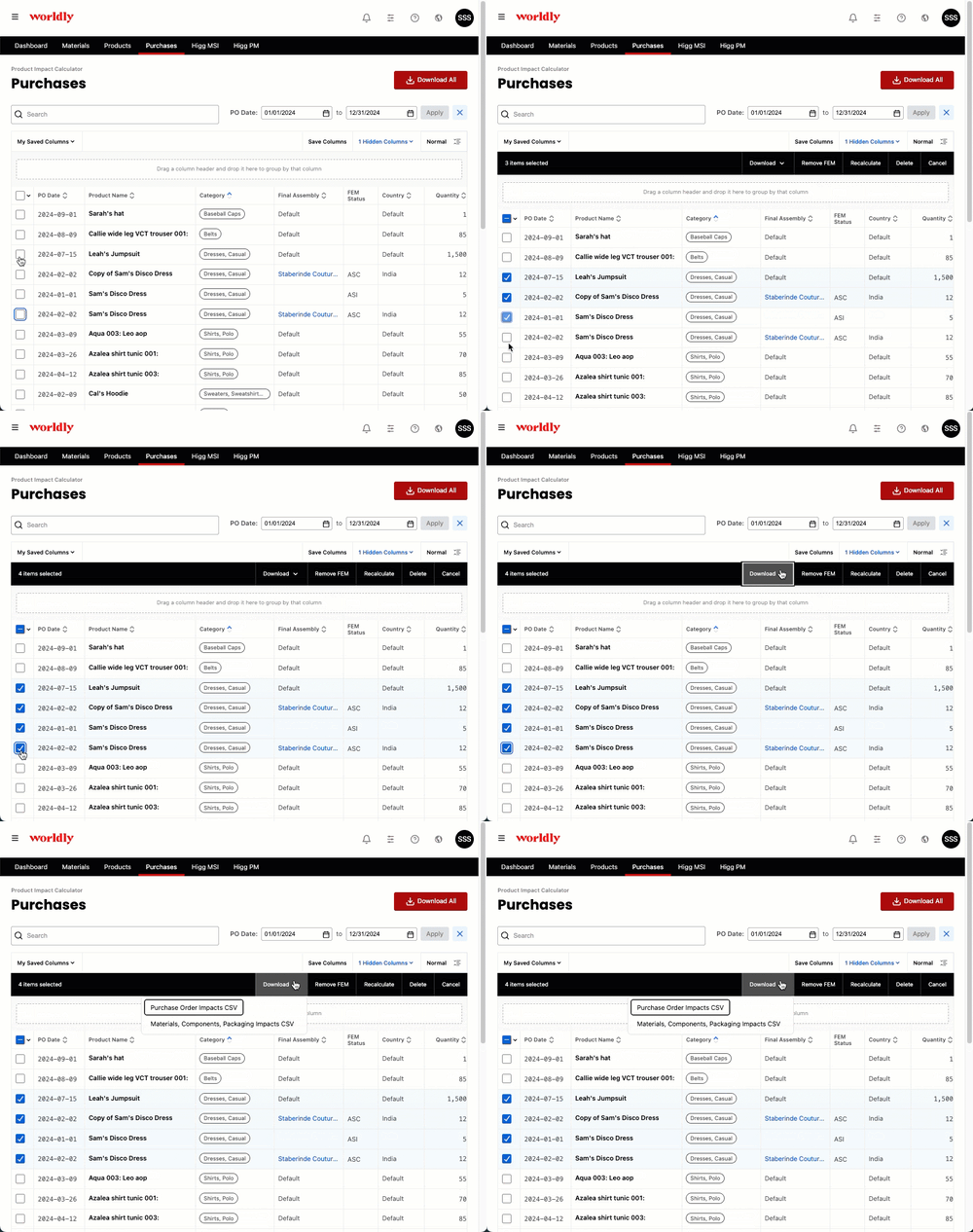
Once the Purchases table is filtered to the date range, you can even download customized CSV files tailored to the specific products selected in the table.

Expand to show screenshot
40766127070619.png

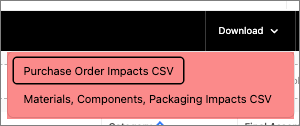
For example, the casual dresses from the table are selected, revealing the black toolbar where you can select Download to access both CSV files. Once downloaded, both CSV files will only show the selected products.

Expand to show screenshot
Date Range 4.gif


Bulk Removing Unverified FEMs

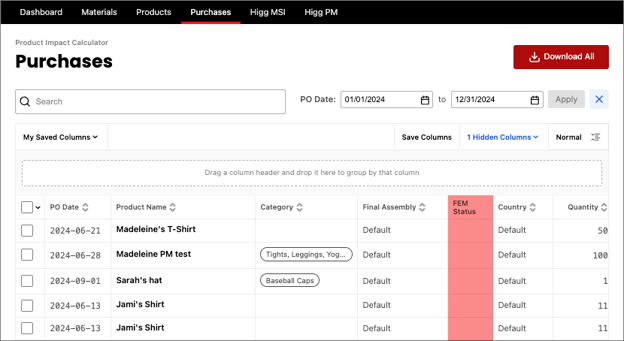
On the Purchases tab, the highlighted column allows you to filter your data based on the FEM assessment status. For a full list of FEM Status definitions, read more here.
40766106399259.png

If you only want to link Purchase Orders to verified FEM assessments, follow these instructions to remove the unverified assessments:

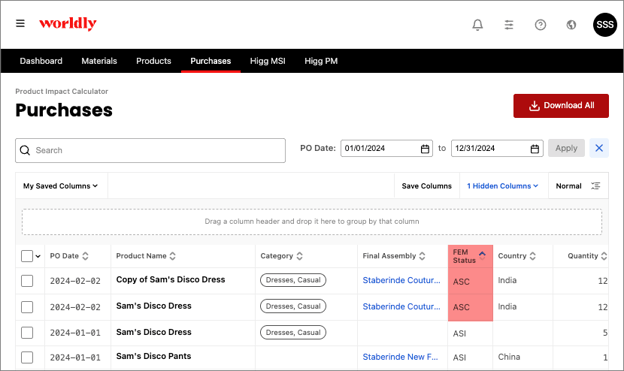
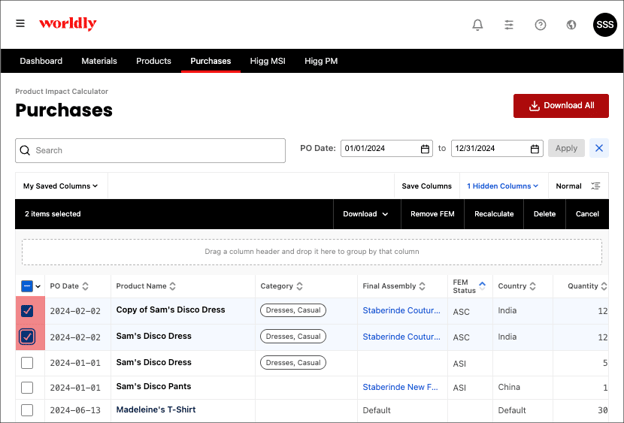
  1. Sort the data alphabetically by clicking on the FEM Status column to sort the data alphabetically. The ASC status refers to Self Assessment Completed, meaning the assessment has been completed but not verified.

    Expand to show screenshot
    40766106401179.png
  2. Click the check boxes in the row you wish to remove the unverified FEM from.

    Expand to show screenshot
    40766106405019.png
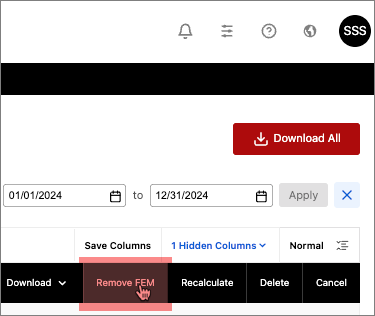
  1. A black navigation bar appears after checking the boxes in the left-hand column. Click Remove FEM to unlink the product from the unverified FEM assessment.

    Expand to show screenshot
    40766127081499.png

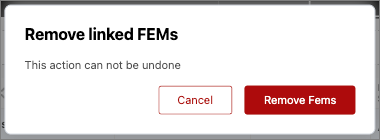
    NOTE: This action cannot be undone.

    Expand to show screenshot
    40766127087259.png
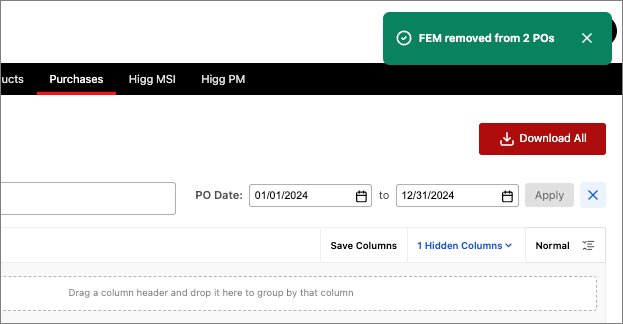
  1. Select Remove FEMs. The unverified FEMs have now been unlinked.

    Expand to show screenshot
    40766106413083.png


Purchase Order Impacts CSV Fields

Field
Description
PO Date
Purchase Order date
PO #
Purchase Order number
Quantity
Quantity purchased
Multi-pack
Numeric value which indicates number of units per multi-pack
Product Name
Name of the product
Type
Type of product--Apparel or Other
Category
Product category -- determines default product weight, materials, components
Product Weight (kg)
Weight of the product
Total Weight
Product weight multiplied by quantity purchased
Materials
Comma-separated list of materials and composition (e.g., Cotton 50, Polyester 50)
Components
Comma-separated list of components and units (e.g., Button, Brass (25mm) 4)
Packaging
Comma-separated list of packaging and units
Product Identifier
User-supplied product identifier
Identifier Type
Type identifier - EAN, GTIN, SKU, Other
Tags
User-assigned tags to help query the report
FEM ID
Assessment ID
Final Assembler ID
Tier 1 Supplier
Final Assembler name
FEM Year
Year of FEM assessment
FEM Status
Status of FEM assessment
Country of Manufacture
French Ecoscore Country
Impact/unit
Impact per product
Total Impact
Total impact for the purchase order
Materials Impacts (kg CO2 eq)
Category 1: Purchased Goods and Services includes all upstream impacts from the bill of materials, packaging, components, and final assembly. This covers Tier 4 through Tier 1.
Components Impacts (kg CO2 eq)
Category 1: Purchased Goods and Services includes all upstream impacts from the bill of materials, packaging, components, and final assembly. This covers Tier 4 through Tier 1.
Final Assembly Impacts (kgCO2 eq)
Category 1: Purchased Goods and Services includes all upstream impacts from the bill of materials, packaging, components, and final assembly. This covers Tier 4 through Tier 1.
Packaging Impacts (kg CO2 eq)
Category 1: Purchased Goods and Services includes all upstream impacts from the bill of materials, packaging, components, and final assembly. This covers Tier 4 through Tier 1.
Upstream Transportation and Distribution (kg CO2 eq)
Category 4: Upstream Transportation and Distribution (kgCO2eq) or upstream logistics incorporate the distance a product travels from the final assembly (gate) to the distribution center.
Downstream transportation (kg CO2 eq)
Category 9: Downstream Transport and Distribution focuses on the transportation and distribution of products once they leave your company. This includes: (1) emissions from transporting products from distribution centers to retail stores or directly to customers; (2) emissions from the distribution of goods like warehousing and storage at 3r party logistic providers.
Distribution Center (kg CO2 eq)
Category 9: Downstream Transport and Distribution focuses on the transportation and distribution of products once they leave your company. This includes: (1) emissions from transporting products from distribution centers to retail stores or directly to customers; (2) emissions from the distribution of goods like warehousing and storage at 3r party logistic providers.
Retail (kg CO2 eq)
Category 9: Downstream Transport and Distribution focuses on the transportation and distribution of products once they leave your company. This includes: (1) emissions from transporting products from distribution centers to retail stores or directly to customers; (2) emissions from the distribution of goods like warehousing and storage at 3r party logistic providers.
Use of sold products (kg CO2 eq)
Category 11: Use of sold products includes the total emissions that are expected to occur while using the products a company sells over their entire lifetime. It’s about the emissions generated when customers use the products the company sells throughout its life.
End-of-life treatment of sold products (kg CO2 eq)
Category 12: End-of-life treatment of sold products includes the total emissions from the disposal or treatment of all the products sold by the company in a given year, such as the emissions from landfilling, incineration, or recycling.
Worldly Account ID
Worldly Brand Account ID
Worldly Product ID
Worldly Generated Product ID
Worldly PO ID
Worldly PO ID
Creator
User who created the product in PIC
Created
Date the product was created in PIC
Modified
User who last modified the product
Modifier
Date the product was last modified
Duplicate
This column will flag any Purchase Order that might be a duplicate, based on PO number, PO date and quantity purchased
Data Source
Where the product impact information was sourced. Example: if product footprint was created in Product Module, this column would indicate PM as the source


Materials, Components, Packaging Impacts CSV Fields

Field
Description
Product Name
Name of the product
Product Type
Type of product -- Apparel or Other
Category
Product category -- determines default product weight, materials, components
Product ID
Worldly Generated ID for the product
Quantity
Quantity purchased
PO Date
Purchase Order date
PO #
Purchase Order number
Name
Name of the product constituent (Material/Component/Packaging/Final Assembler)
Type
Constituent Type (material, component, packaging, final assembly)
ID
Example: FEM assessment ID
Code
Code of the entity
Data Source
Year of FEM module or whether material was linked from MSI
Material Net Use %
Refers to cutting efficiency
Material BOM %
Percentage of material if yarn is a blend
Weight/Product (kg)
Material weight per product
Total Weight (kg)
Total weight of the material per PO
Units/Product
How many units per product (e.g., buttons)
Total Units
Total units for PO
Impact/Product (kg CO₂e)
Per Product impact of the Material/Component/Packaging/Final Assembly
Total Impact (kg CO₂e)
Total impact of the Material/Component/Packaging/Final Assembly for the PO
Description
Explanation of the default assumptions made for production stages


FEM Outlier Exclusion

Unusual or potentially erroneous FEM data is automatically excluded before it impacts product-level calculations.